56:49
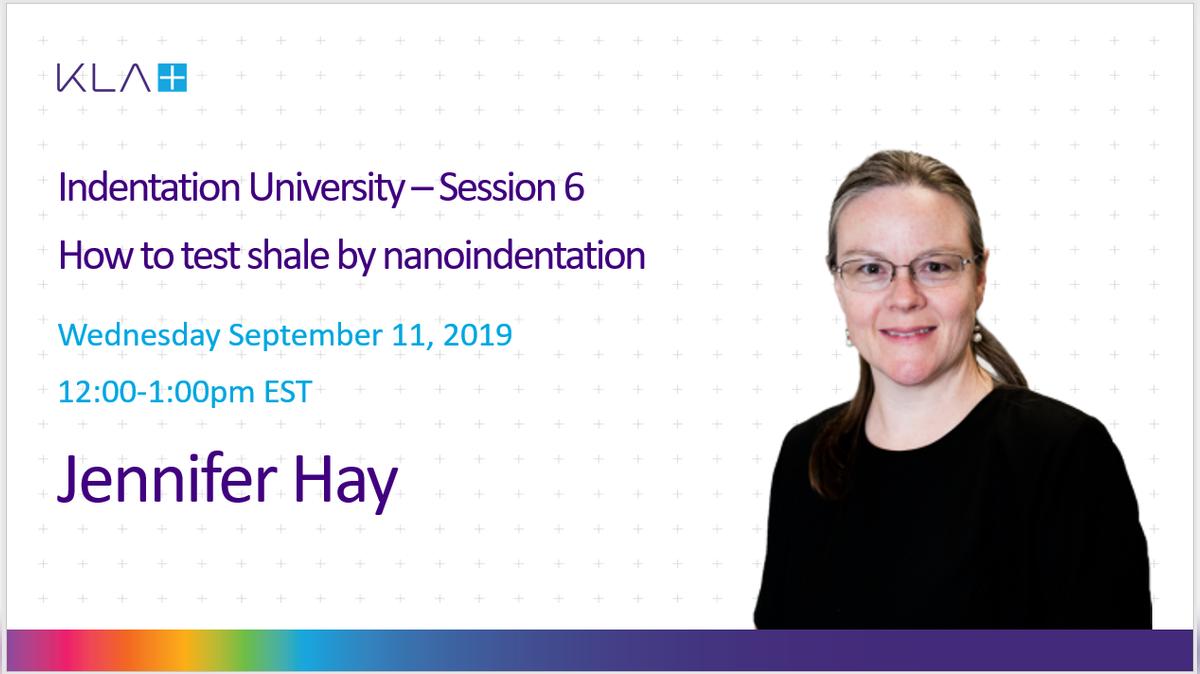
Knowledge of Young’s modulus is essential for the design and control of the extensive fractures required for harvesting natural gas from shale formations. Nanoindentation of drill fragments provides an economical and localized way to measure Young’s modulus of shale. This session is a live demonstration of standardized nanoindentation with the KLA iMicro nanoindenter to characterize shale. Ms. Hay demonstrates sample preparation, instrument configuration, test specification, execution and data interpretation.
52:42
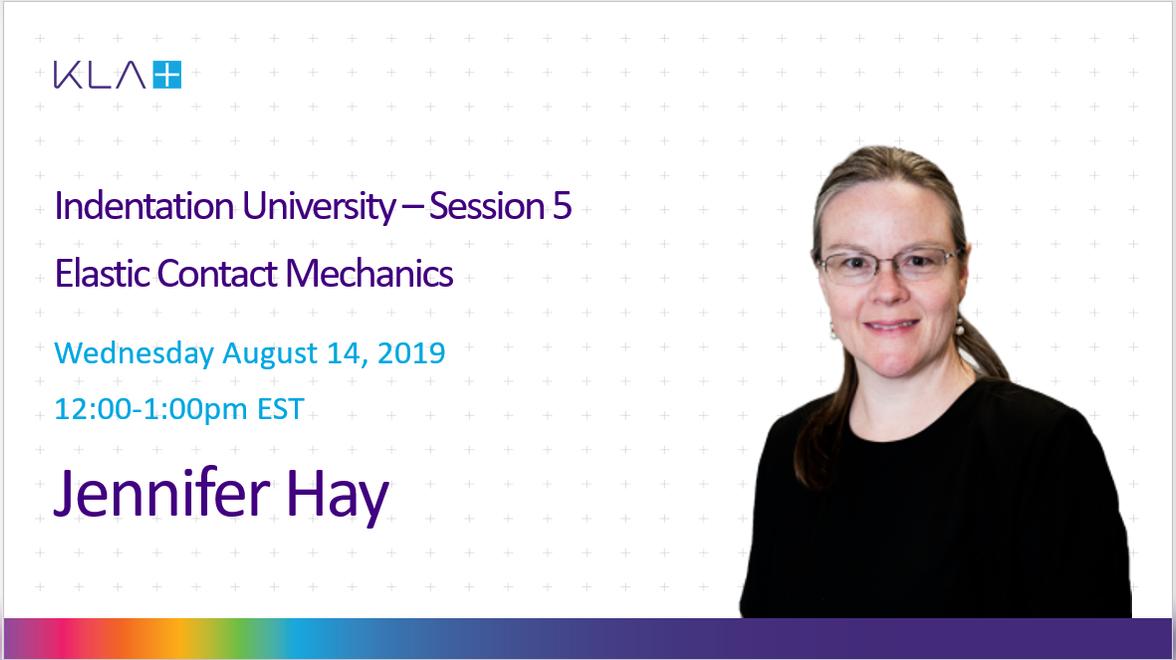
Force and displacement measurements obtained from instrumented indentation experiments are interpreted using elastic contact models, even when the contact causes plastic deformation. Elastic contact models specify the ideal relationship between force, displacement, and elastic properties. Such models are explained in this presentation. Ian Sneddon’s elastic contact model is given special attention due to its generality, and the models of Hertz and Love are shown to be special cases of Sneddon’s model. Many examples are provided which show how to apply Sneddon’s model to specific geometries ...
53:38
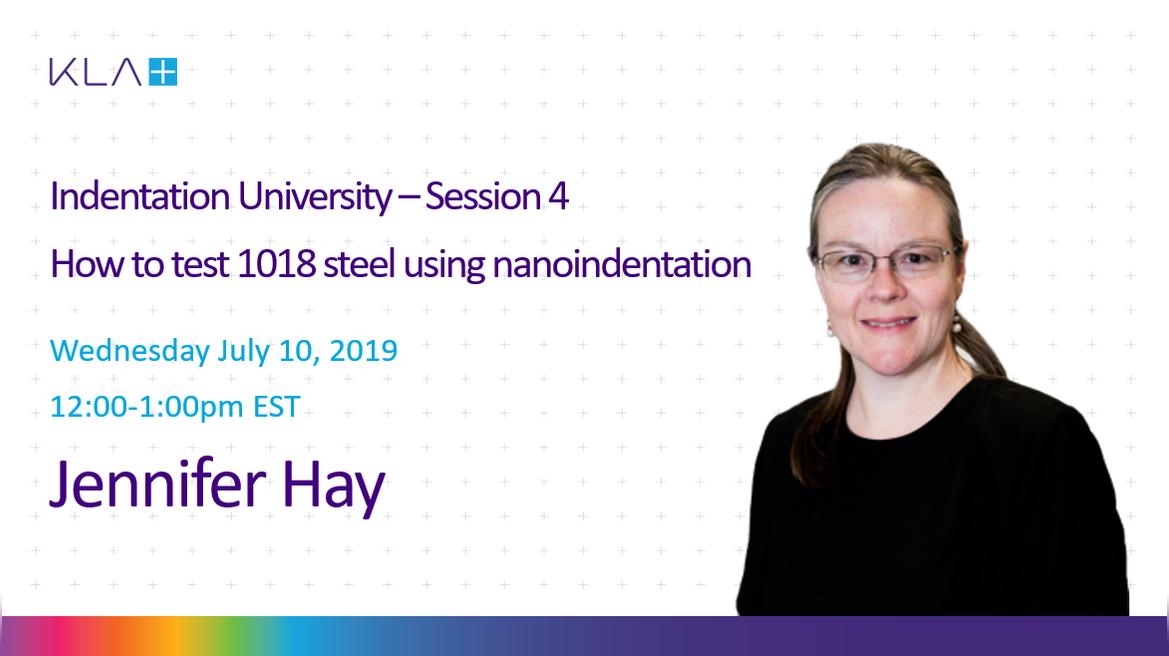
Low-carbon steels are the first option when designing with steel. They offer good machinability and excellent weldability. To some extent, the strength and ductility can be manipulated by various thermal and mechanical processes, such as working, annealing, and carburization. This session is a live demonstration of standardized nanoindentation with the KLA iMicro nanoindenter to characterize cold-drawn 1018 steel. Ms. Hay demonstrates sample preparation, instrument configuration, test specification, execution and data interpretation.
See the KLA nanoindenters by visiting https://www.kla-ten...
01:01:00
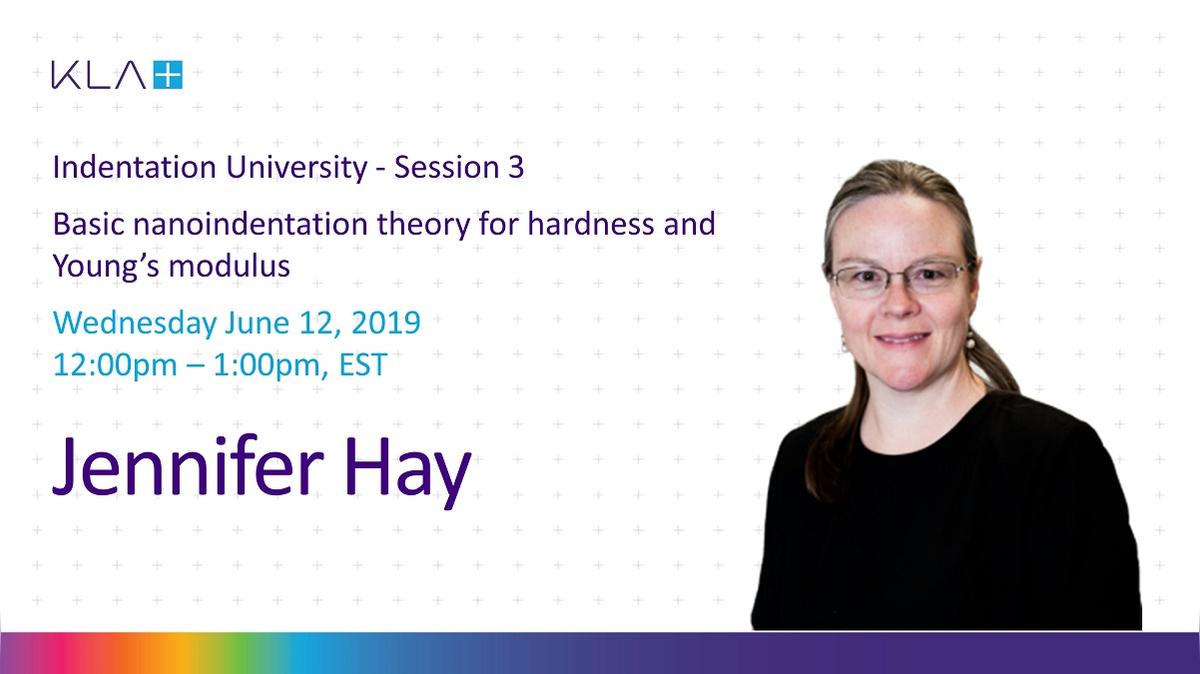
In its most basic form, instrumented indentation involves pressing an indenter of known geometry into a test surface while continuously monitoring force and displacement. In this session, we review the test and analysis commonly known as the “Oliver-Pharr” method for measuring hardness and Young’s modulus. The continuous measurement of force and displacement affords two important advantages over traditional hardness testing. First, the contact area can be analytically inferred and does not have to be optically measured. Second, the displacements measured during unloading manifest elastic re...
53:30
In 1992, Warren Oliver and George Pharr published an article that revolutionized hardness testing. The genius of Oliver and Pharr was that they devised a way to know the size of a hardness indentation without imaging it. This development disrupted Vickers and Knoop microhardness testing, which required direct measurement of the lengths of the indentation diagonals. Not having to image the indentation paved the way for fully automated hardness testing. Not only was automated testing independent of human bias, it was also much faster, because multiple tests on multiple samples could be prescr...
01:57

High speed nanoindentation completed using NanoBlitz 3D.
See the KLA nanoindenters by visiting https://www.kla-tencor.com/products/nanomechanical-testers.
